Compost G+ usage guide

Shredded prunings and hen manure (gallinaza), composted together at Las Rosas (Agüimes, Gran Canaria). Here is how much to use, when and how, for each use.

  • 2-2-2N-P-K
  • 35–40%organic matter
  • Class BRD 506/2013
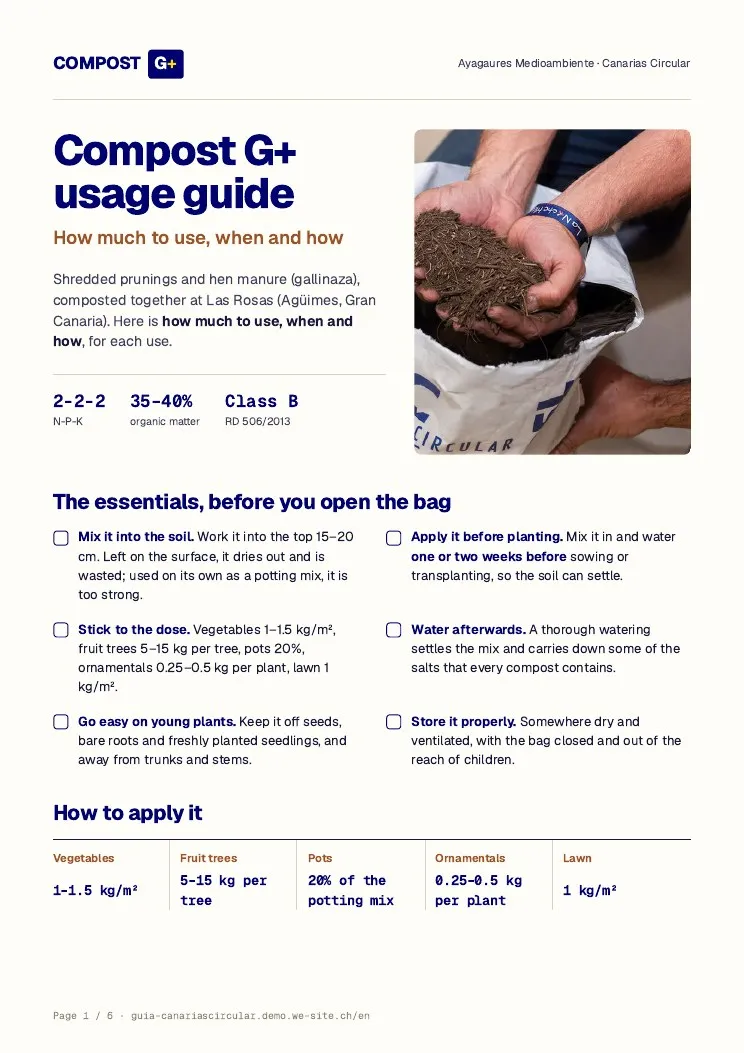
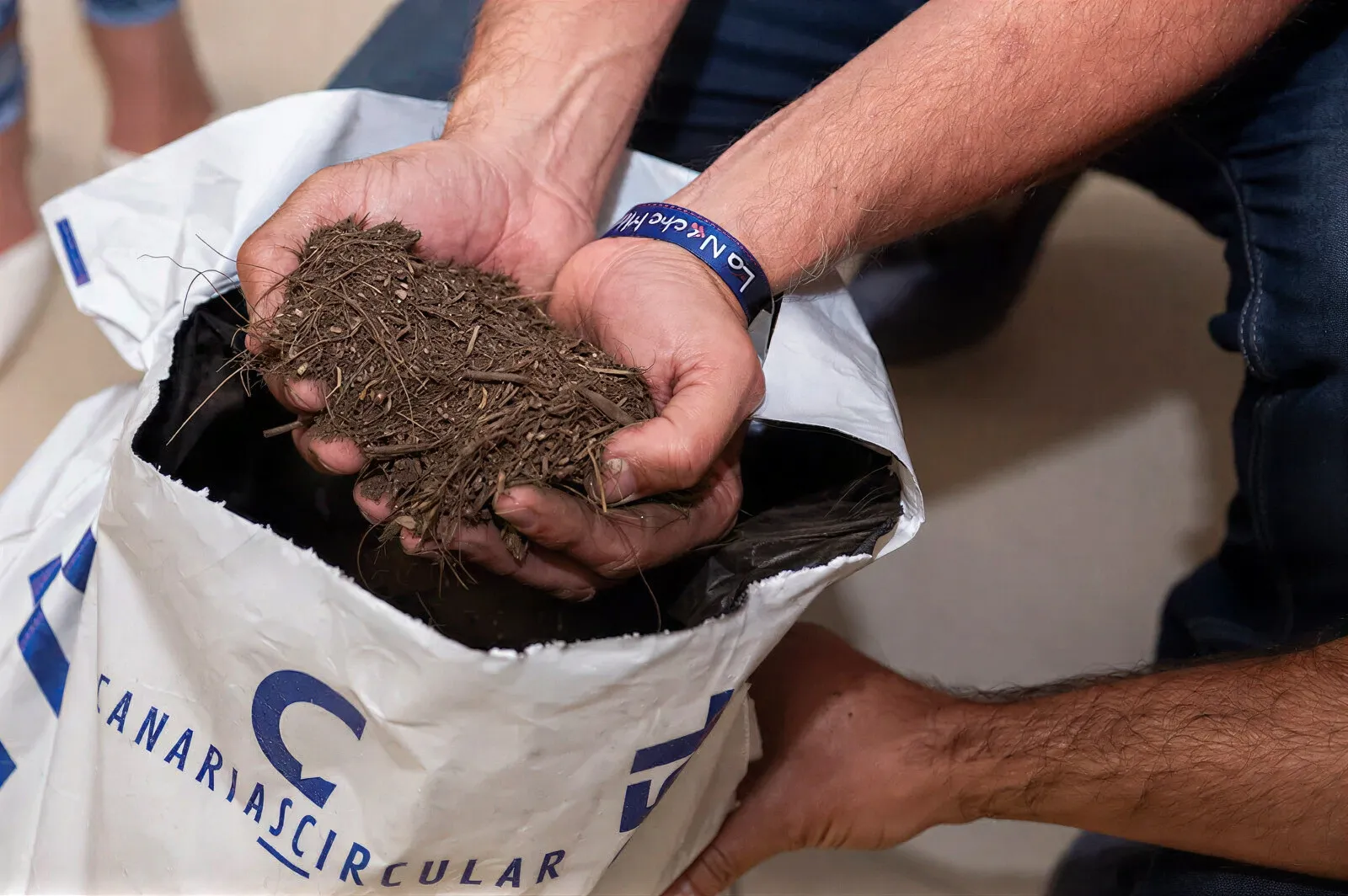
Two hands lift a handful of dark, loose compost out of a white Canarias Circular bag.
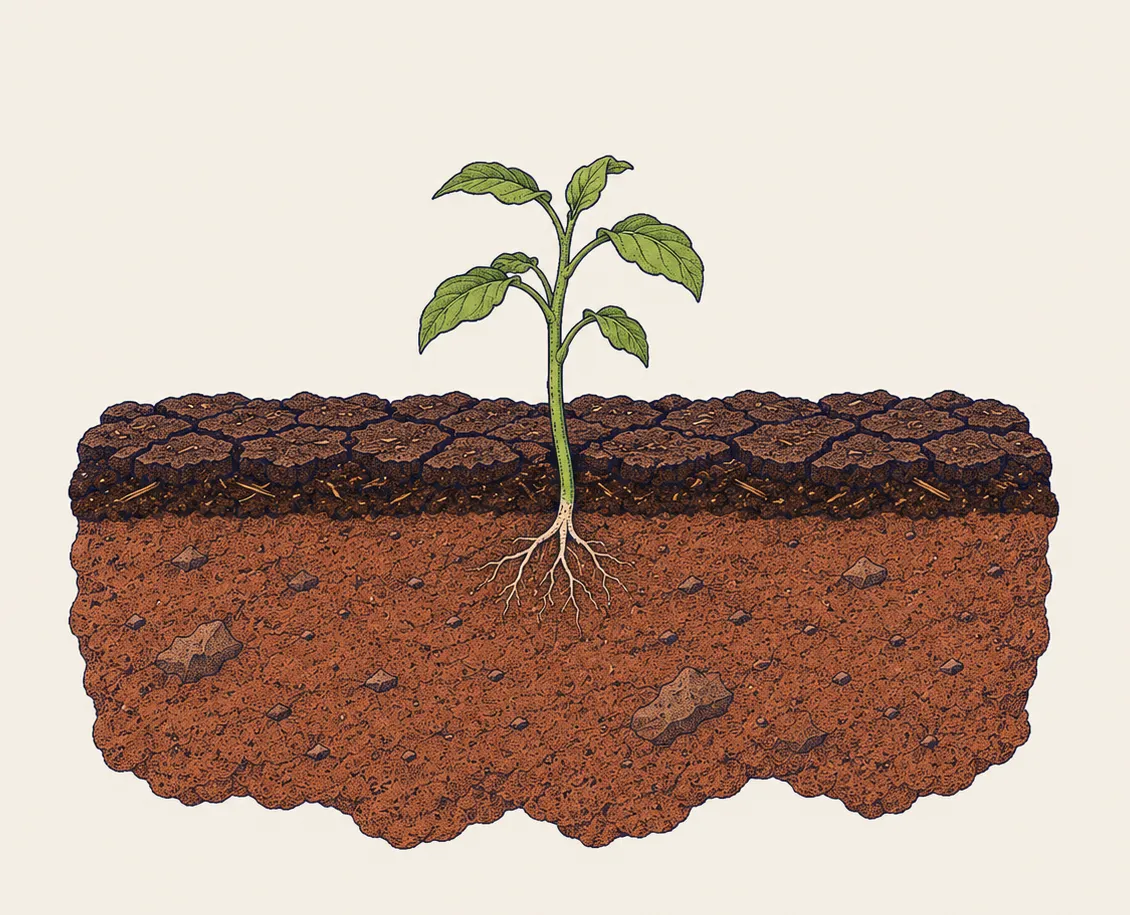
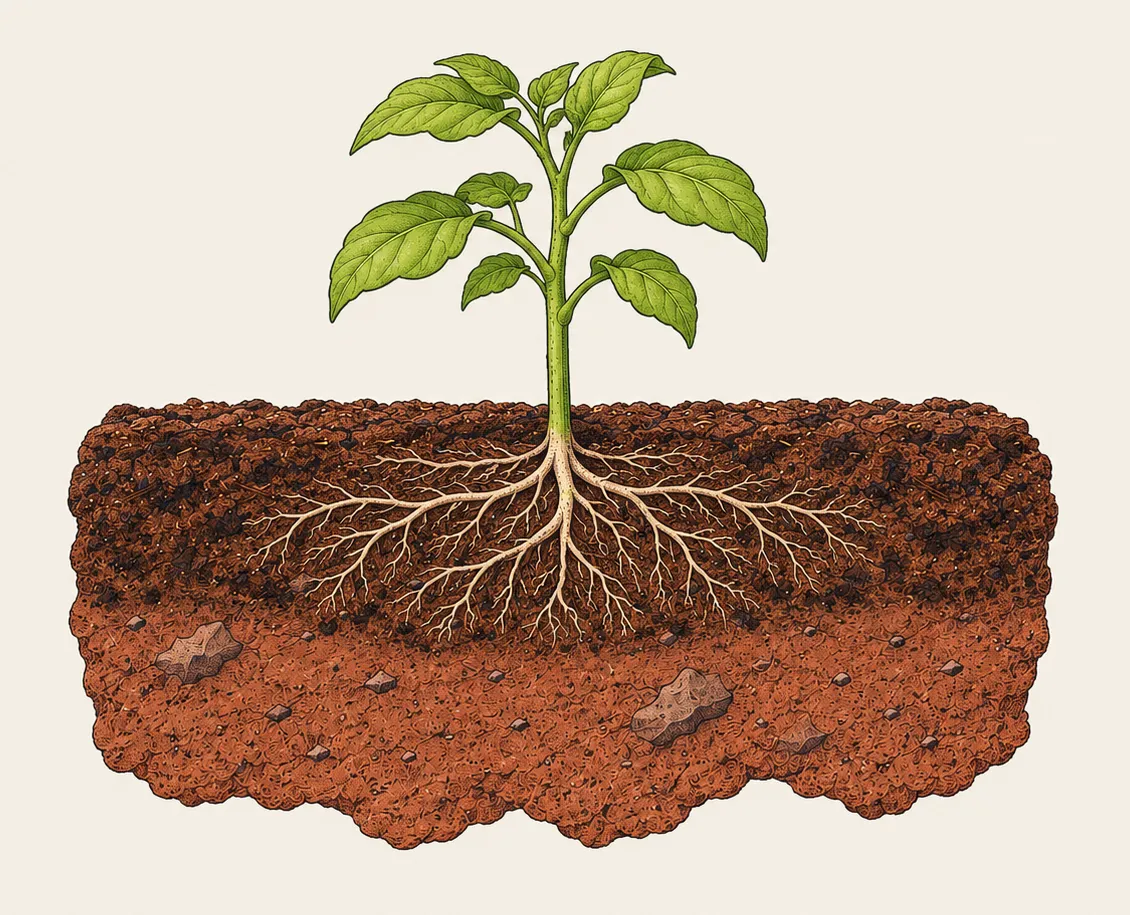
Cross-section of soil: the compost goes from a layer on top to being spread through the top 20 centimetres, where the roots grow.

The essentials, before you open the bag

Six rules that hold for every use. The rest of the guide applies them case by case.

  • Mix it into the soil

    Work it into the top 15–20 cm. Left on the surface, it dries out and is wasted; used on its own as a potting mix, it is too strong.

  • Apply it before planting

    Mix it in and water one or two weeks before sowing or transplanting, so the soil can settle.

  • Stick to the dose

    Vegetables 1–1.5 kg/m², fruit trees 5–15 kg per tree, pots 20%, ornamentals 0.25–0.5 kg per plant, lawn 1 kg/m².

  • Water afterwards

    A thorough watering settles the mix and carries down some of the salts that every compost contains.

  • Go easy on young plants

    Keep it off seeds, bare roots and freshly planted seedlings, and away from trunks and stems.

  • Store it properly

    Somewhere dry and ventilated, with the bag closed and out of the reach of children.

Why mix it in
  • Left on topdries in the sun and never reaches the roots
  • Mixed into the top 15–20 cmwhere the roots and the moisture are

Work out how much you need

Choose the use, type in the measurement and we’ll tell you how much Compost G+ to apply and how many bags that is. Based on the doses on the product sheet.

Use
m²

You need

50–75kg

Doses from the Compost G+ product sheet. They are a guide: if you have a soil analysis or an adviser, go by what they say.

How to apply it

The five doses on the product sheet, with how to apply each one.

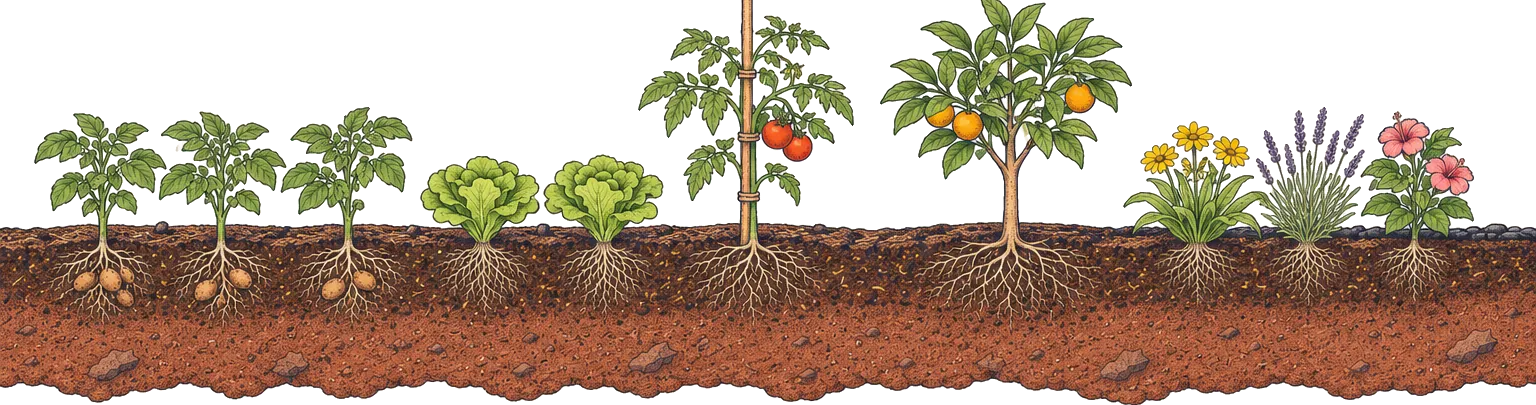
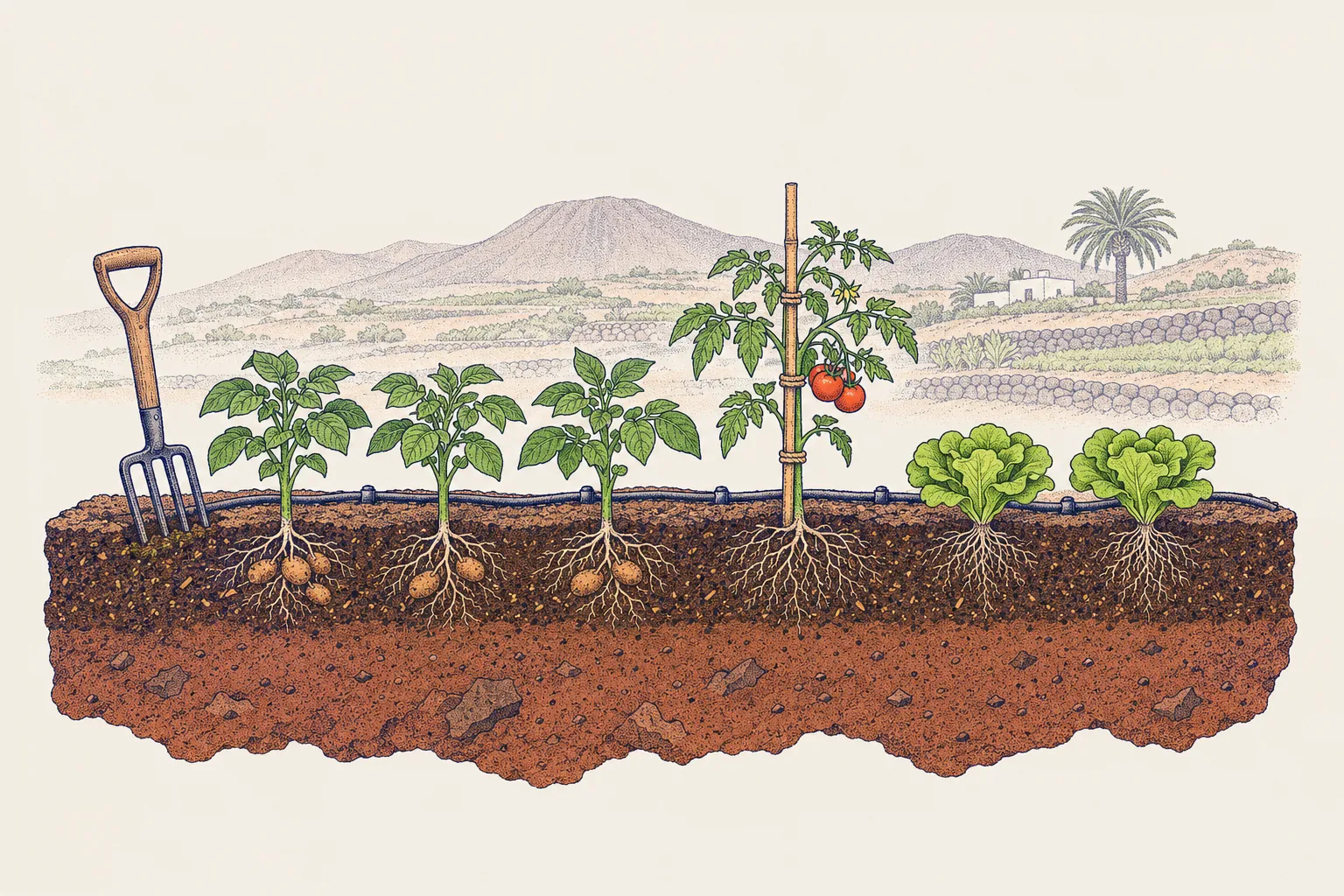
Cross-section of a vegetable plot with potatoes, a tomato plant and lettuces: the compost is spread through the top 20 cm of soil, where the roots grow.

Vegetable gardens and crops

1–1.5 kg/m²10 to 15 tonnes per hectare

When

When preparing the soil, one or two weeks before planting.

How
  1. Spread the compost evenly over the dug soil.
  2. Mix it into the top 15–20 cm with a hoe, a cultivator or a rotavator.
  3. Water thoroughly and let it settle before sowing or transplanting.
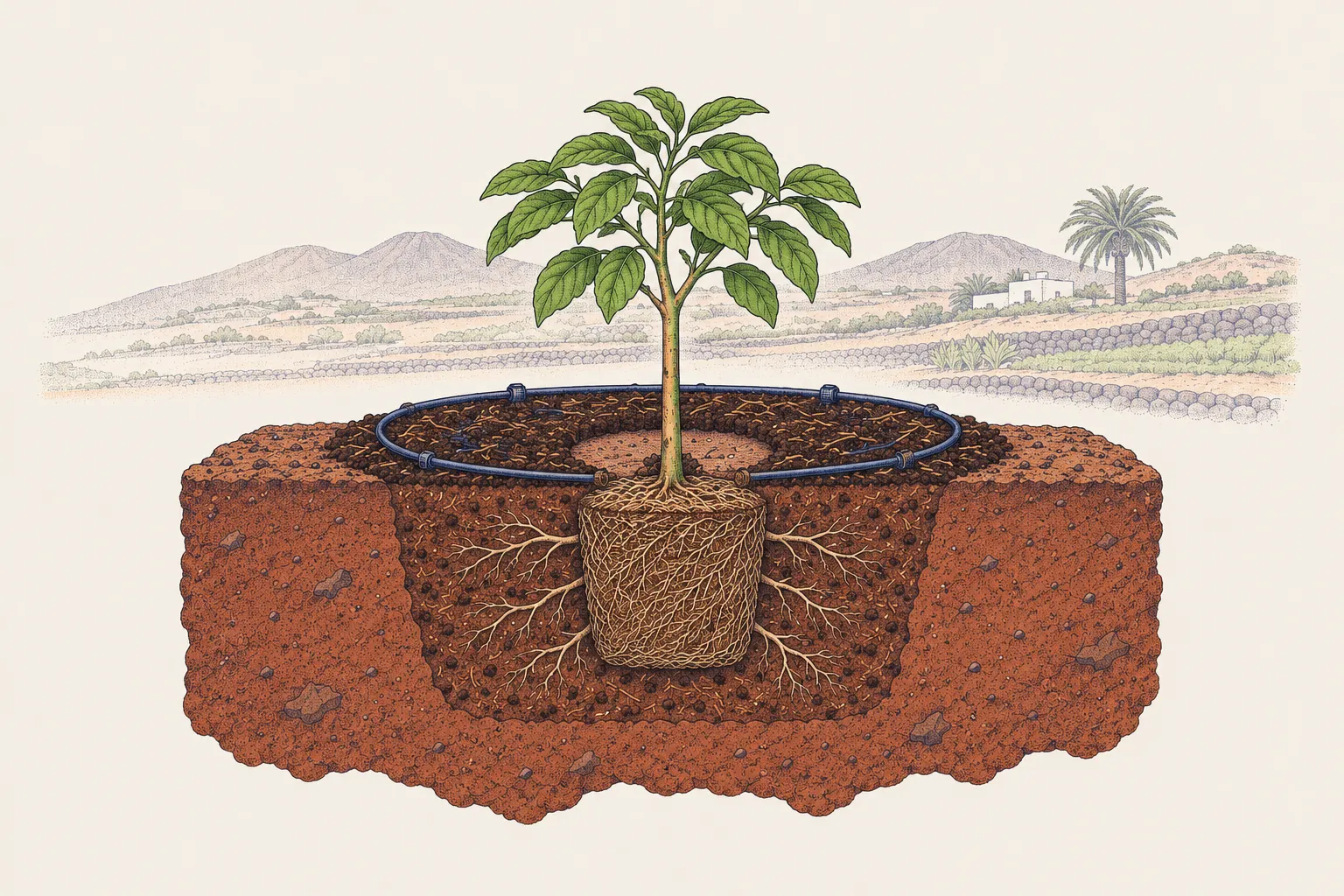
Cross-section of a young avocado tree: the soil in the planting hole has compost mixed in around the root ball, and on the surface a ring of compost lies under the canopy, clear of the trunk.

Trees and fruit trees

5–15 kg per treethe low end for a young tree, the high end for a large mature one

When

At planting, in the soil of the planting hole; after that, once a year, before the buds break.

How
  1. At planting: mix the compost into the soil that goes back into the hole, keeping it off the root ball.
  2. On established trees: spread it in a ring under the edge of the canopy, where the feeding roots are.
  3. Leave a hand’s span clear around the trunk, scratch it into the soil and water.
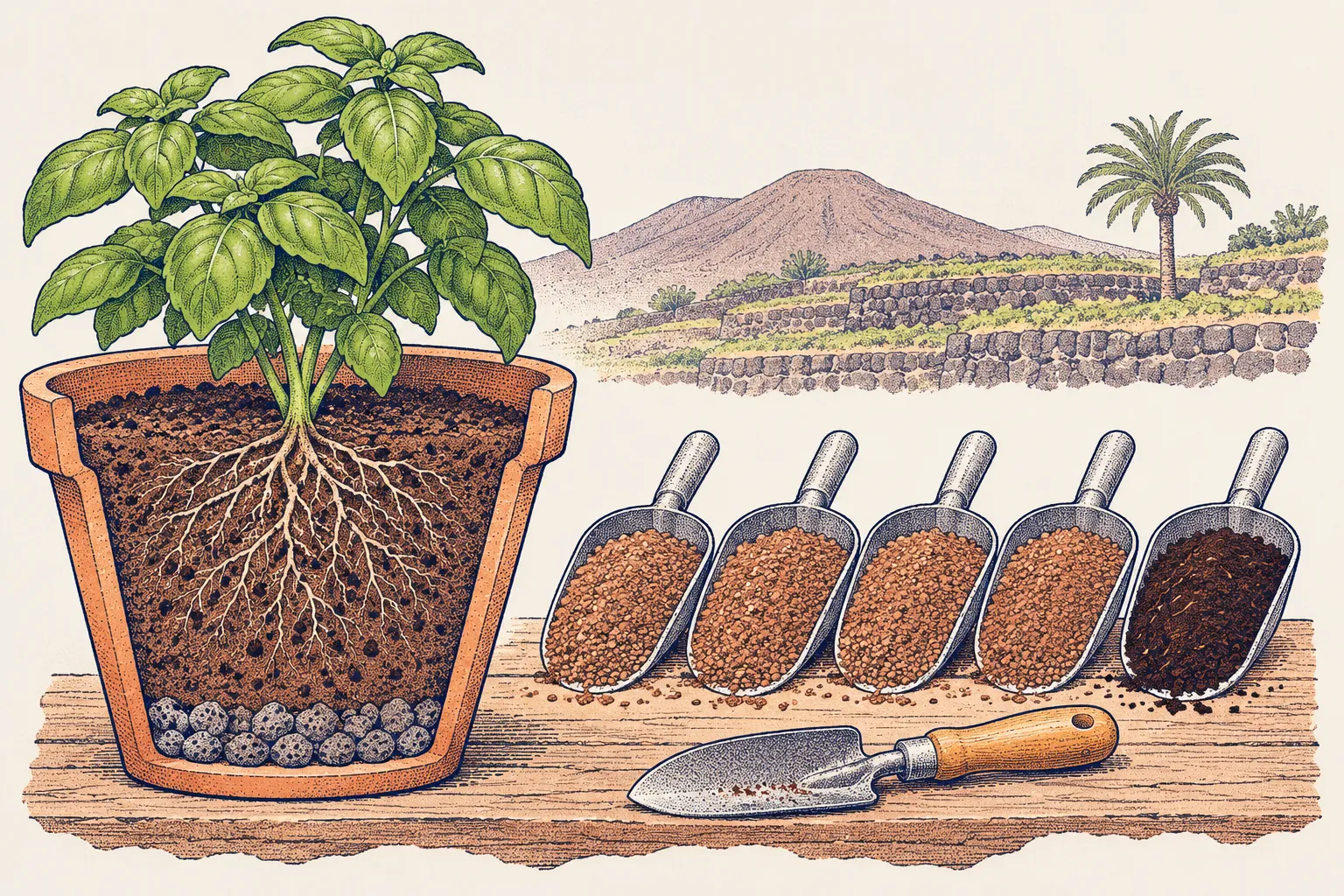
A clay pot cut in half with a plant in it: the compost is spread evenly through the potting mix; beside it, four spadefuls of soil and one of compost.

Pots and planters

20% of the potting mixone part compost to four parts soil

When

When filling the pot or repotting.

How
  1. Measure out the mix: for every 4 buckets of soil, 1 of Compost G+.
  2. Mix them well before filling, leaving no layers.
  3. Plant and water until the water runs out of the bottom.
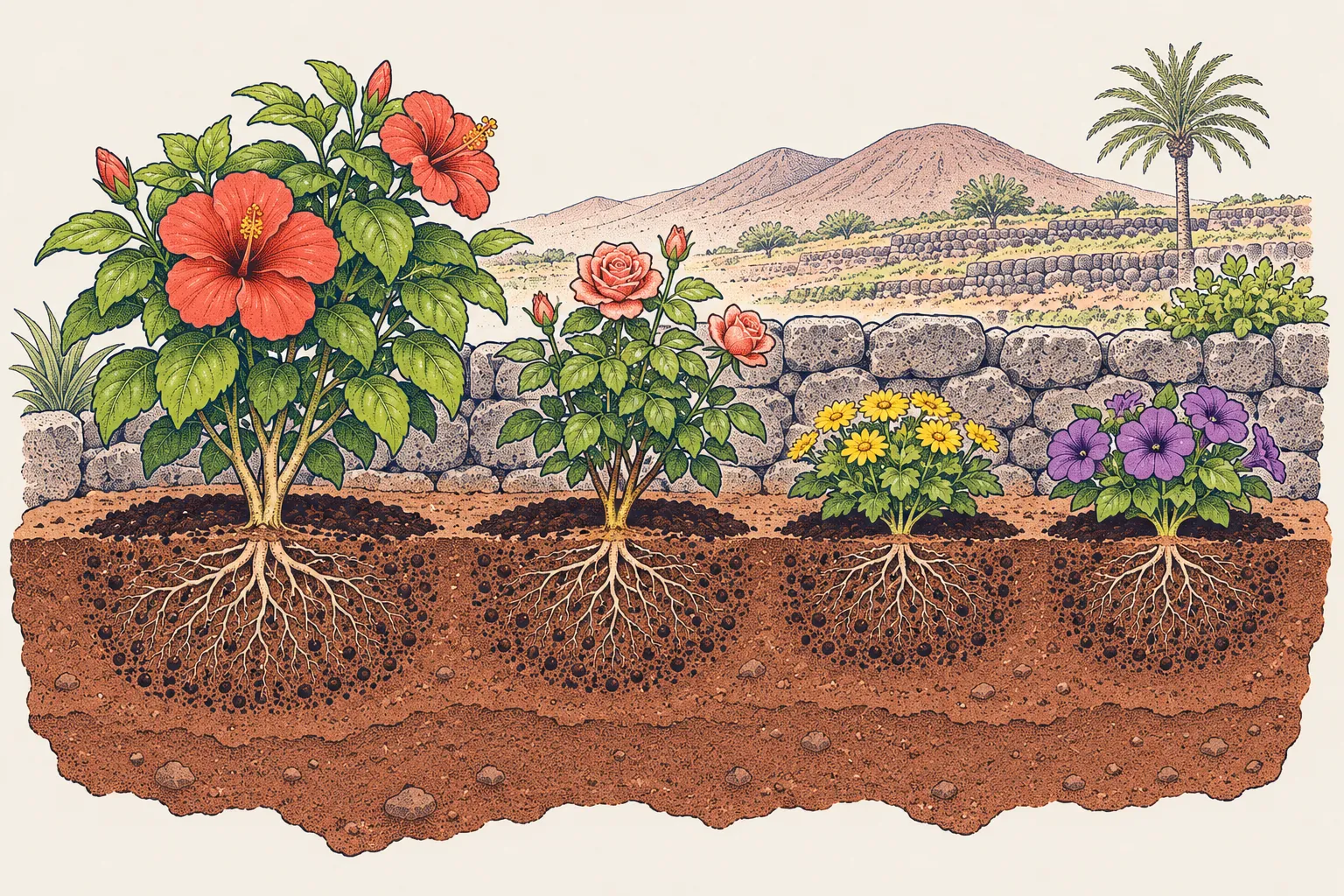
Cross-section of a flower bed with a hibiscus, a rose bush and seasonal flowers: under each plant the compost is mixed into the soil around the roots, clear of the stems.

Ornamental plants

0.25–0.5 kg per plantdepending on the size of the plant

When

At planting and, on established plants, at the start of the growing season.

How
  1. At planting: mix the compost into the soil of the hole.
  2. On established plants: spread it around them, in a circle as wide as the plant.
  3. Work it in with a hand rake, keeping off the stems, and water.
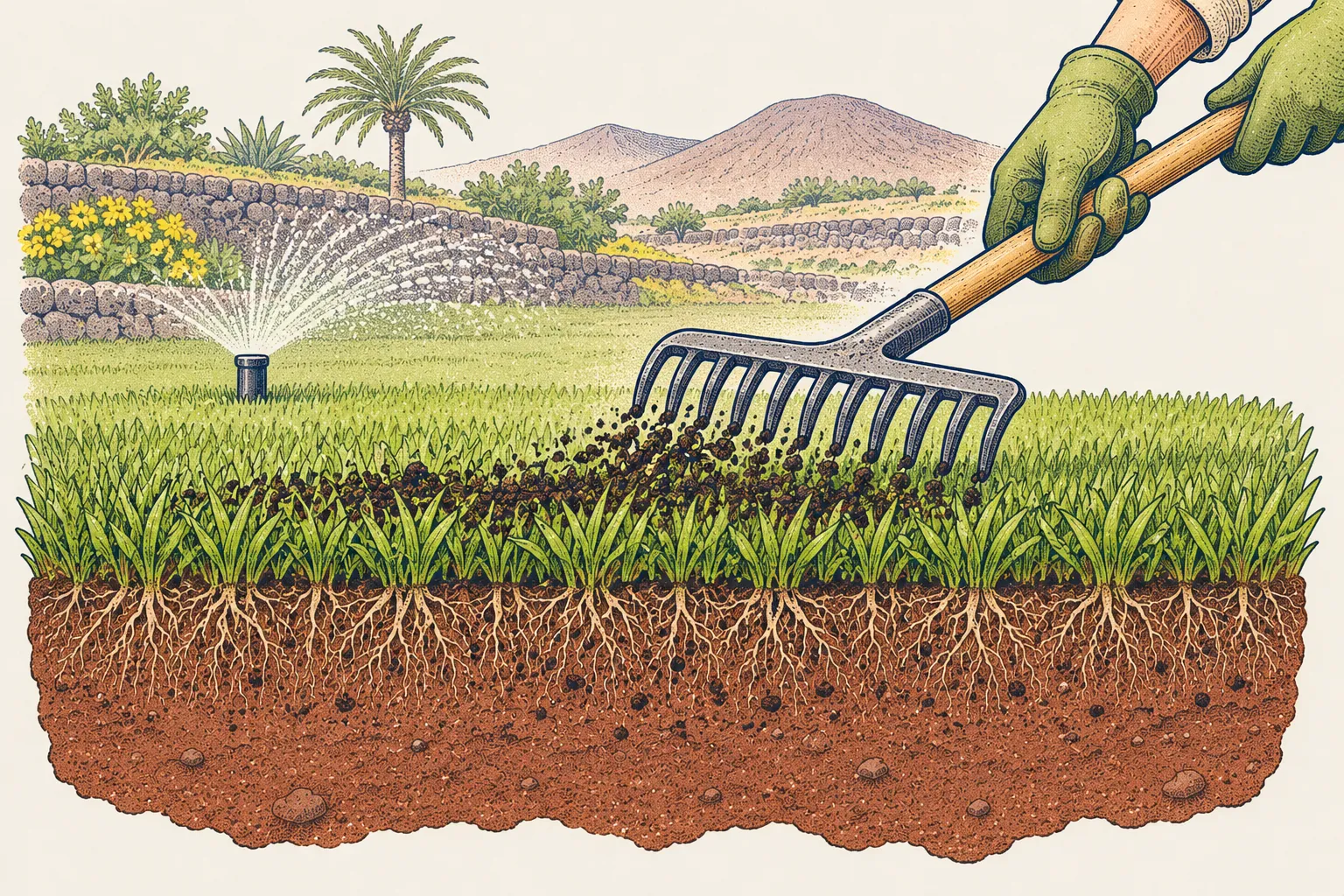
Cross-section of a lawn: a rake spreads a very thin layer of compost that falls between the blades down to the soil; in the background, a sprinkler is watering.

Lawn

1 kg/m²a thin layer, under a centimetre

When

Before sowing, mixed into the soil; on an established lawn, after mowing and aerating.

How
  1. To sow: mix it into the top 10 cm, level and sow.
  2. On an established lawn: mow short, aerate and spread a thin, even layer.
  3. Rake it so it falls between the blades, and water.

On the island’s crops

Which of the five doses suits each crop, and when. A guide only: your soil analysis and your adviser have the final say.

CropDoseWhenNote
1–1.5 kg/m²When preparing the ground, before planting the seed potatoes.Mixed into the soil, not in the furrow next to the seed potatoes.
1–1.5 kg/m²Before transplanting, in the ridge or the planting row.Water well before setting out the seedling.
1 kg/m²Before planting.Lettuce tolerates little salt: low dose, well mixed in.
1 kg/m²In good time, two weeks before.Among the most salt-sensitive crops.
5–15 kg per plantOnce a year, spread over the watered area.Never heaped against the plant.
5–15 kg per treeAt planting and before the buds break.Salt-sensitive: well mixed in, away from the trunk and watered in.
5–15 kg per treeAt planting and once a year.The low end for young trees.
0.25–0.5 kg per plantAt planting or as growth starts.Keep it off the stems.

The doses come from the product sheet (vegetables, fruit trees, ornamentals); the split by crop and the timings are a guide only.

Salt, explained

The sheet gives a conductivity of 6–8 dS/m. That is a measure of the salts in the compost, as in any organic fertiliser made with manure. Used properly, it is not a problem.

Conductivity of the product (dS/m)

Measured in the product, not in your soil: once it is mixed in at the right dose, far less salt reaches the soil.

  • Never on its own as potting mixIn pots, 20% and the rest soil.
  • Always mixed inSpread through the soil it is diluted; in a heap or a layer it is concentrated.
  • Watered in afterwardsEspecially if the water from your well or your irrigation community is already salty.
  • Away from sensitive plantsSeedbeds, freshly planted seedlings, strawberries, beans, carrots, onions, avocado and citrus: low dose and in good time.

What’s in it, in plain words

The figures on the Ministry of Agriculture’s registry sheet, number F0005621/2033, and what each one means for your soil.

The recipe

Aerobic composting in trenches with forced air and in piles turned regularly, with a high-temperature phase that sanitises it.

See the sheet in the Ministry’s registry

Sanitised

Salmonella absent in 25 g and E. coli 3 MPN/g, according to the Ministry sheet: below the limits of Real Decreto 506/2013.

Analysis on fresh weight
WhatValueWhat it means
Total nitrogen (N)2.0–2.3%Food for green growth; nearly all in organic form, released slowly.
Organic nitrogen1.8–2.2%The part of the nitrogen that watering does not wash out; it is released as the crop grows.
Phosphorus (P₂O₅)2.2–2.7%Roots, flowers and fruit.
Potassium (K₂O)1.9–2.3%Fruit quality and size, drought resistance.
Total organic matter35–40%What loosens the soil and helps it hold water.
Organic carbon21–26%The basis of organic matter and of life in the soil.
Humic acids2.5–3.5%Help the soil hold water and nutrients.
Fulvic acids2.9–4.0%Help the plant take up nutrients.
C/N ratio9–12Between 9 and 12 means a mature compost: it does not rob the plant of nitrogen.
pH7–8.5Neutral to slightly alkaline.
Electrical conductivity6–8dS/mThe salts it contains: that is why you mix it in and water.
Maximum moisture15–27%It comes dry: the weight is compost, not water.
Particle size90% < 25mmFine and screened: 90% passes through a 25 mm mesh.

Why class B?

Spain’s fertiliser decree, Real Decreto 506/2013, sorts organic products into classes A, B and C by their heavy-metal content. Compost G+ is over the class A limit for copper, nickel, zinc and mercury, and under the class B limit for all of them. Class B can be used in farming without the cap of 5 tonnes of dry matter per hectare per year that the decree sets for class C.

  • Cadmium0.5Compost G+: 0.5 mg/kg of dry matter; class A limit 0.7; class B limit 2
  • Copper82Compost G+: 82 mg/kg of dry matter; class A limit 70; class B limit 300
  • Nickel34Compost G+: 34 mg/kg of dry matter; class A limit 25; class B limit 90
  • Lead7Compost G+: 7 mg/kg of dry matter; class A limit 45; class B limit 150
  • Zinc349Compost G+: 349 mg/kg of dry matter; class A limit 200; class B limit 500
  • Mercury0.9Compost G+: 0.9 mg/kg of dry matter; class A limit 0.4; class B limit 1.5
  • Chromium11.4Compost G+: 11.4 mg/kg of dry matter; class A limit 70; class B limit 250

How it is made, at Las Rosas

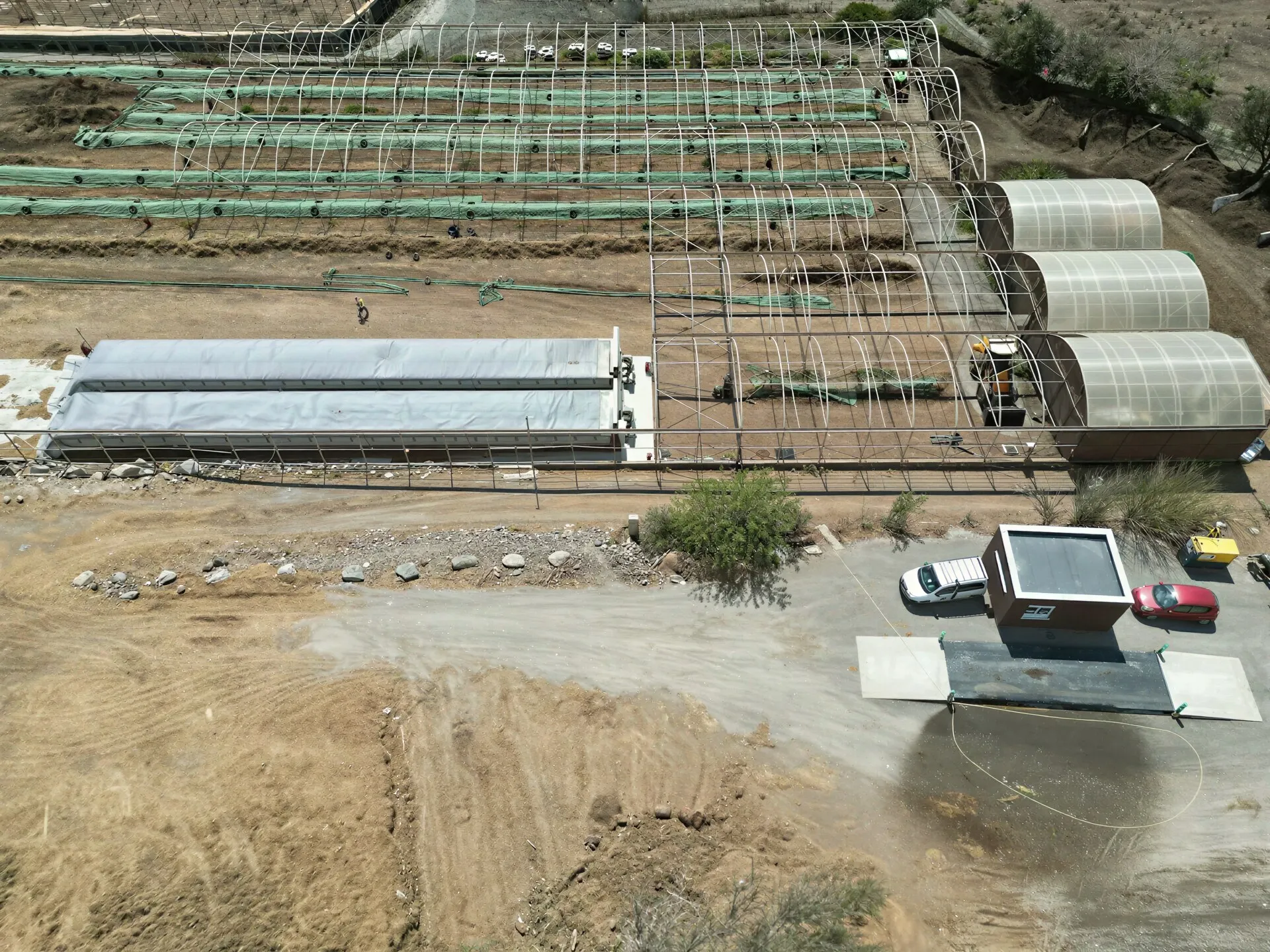
The island’s prunings and hen manure go in at one end of the Las Rosas plant, in Agüimes, and come out at the other as screened compost.

  1. Aerial view of the Las Rosas composting plant: rows of covered trenches, white tunnels and the weighbridge at the entrance.

    Prunings and hen manure

    Shredded plant waste (50–60%) and hen manure (40–50%), mixed in the right proportions.

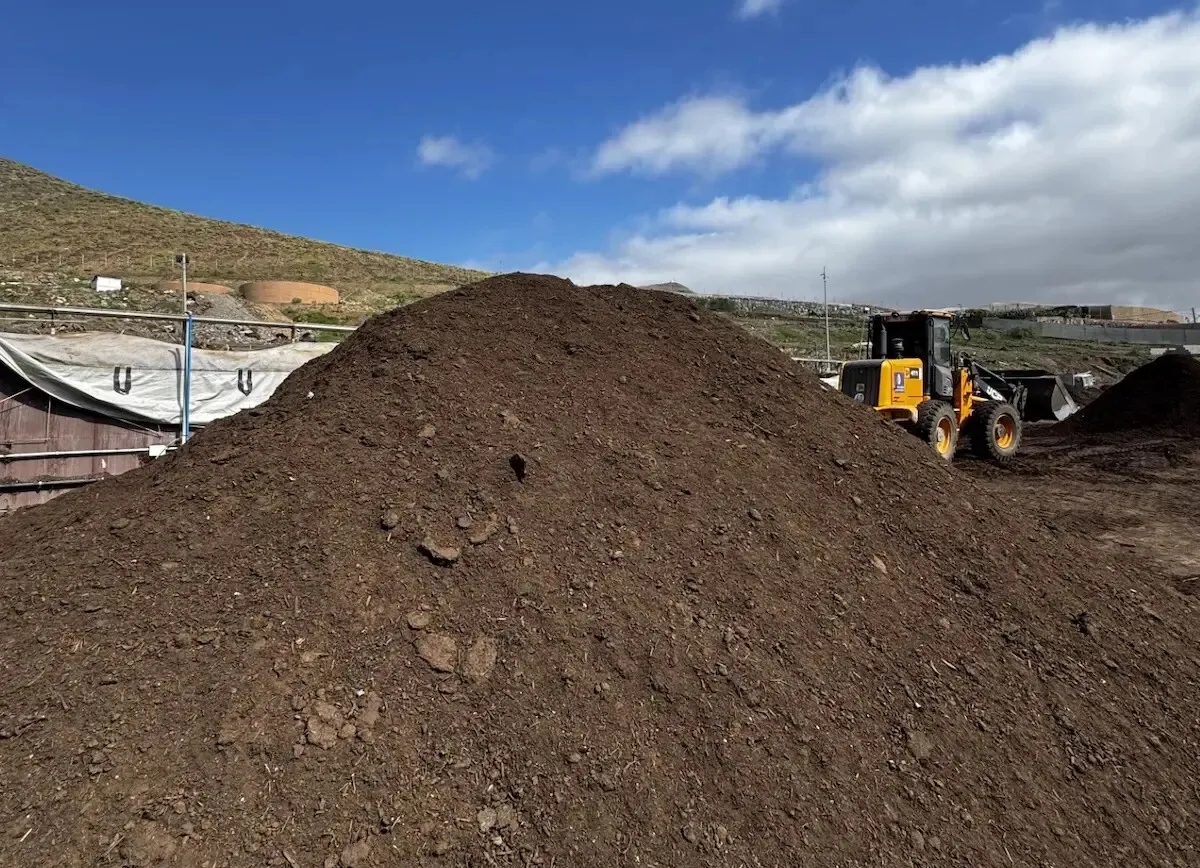
  2. Long piles of dark compost at the Las Rosas plant, with a wheel loader, greenhouses and mountains behind.

    Aerated trenches and turned piles

    Forced air and regular turning keep the composting aerobic and hot: that is what sanitises it.

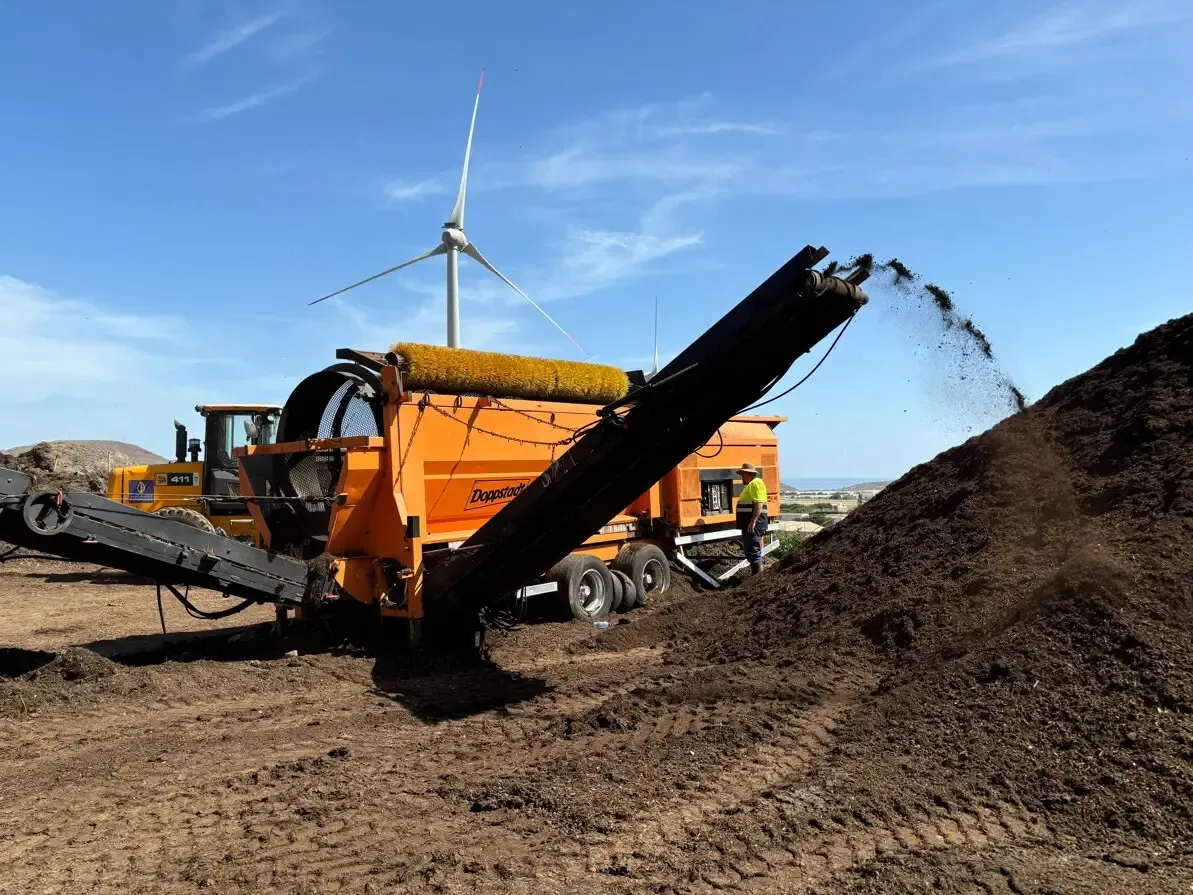
  3. An orange trommel screens the compost onto a dark heap, with a wind turbine behind.

    Screened and mature

    A trommel screens it until 90% passes through the 25 mm mesh. It comes out mature and ready to use.

571,360 kg

of Compost G+ distributed in 2025, three times as much as in 2024: on farms, in municipal gardens and in school gardens.

Formats and where to buy

At 22 garden centres, hardware stores and farm shops in Gran Canaria and at four Spar supermarkets; also in Tenerife and Lanzarote.

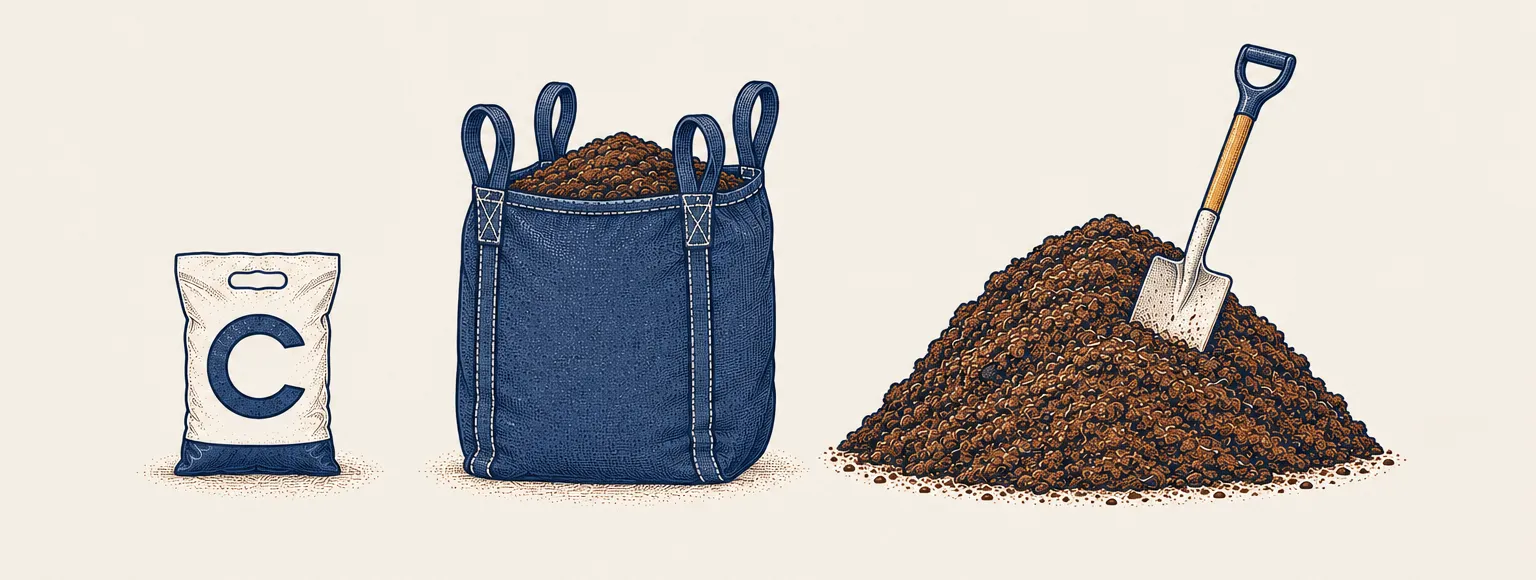
The three formats from small to large: the white 15 kg bag with the Canarias Circular C, a 300 kg BigBag and a heap of bulk compost with a shovel.
  • Bag15 kg

    For the vegetable patch, pots and garden at home.

  • BigBag300 kg

    For farms and large gardens. About 200–300 m² of vegetable garden.

  • BulkTonnes

    For farm businesses and councils, with delivery.

Stockists in Gran Canaria
Made here: Las Rosas3Agüimes1Arucas3Gáldar1Ingenio3Las Palmas1Mogán2S. Bartolomé3Santa Brígida1Santa Lucía2Guía2Valsequillo

22 stockists

  • MicrorriegoC. Eucalipto, 5, AgüimesAgüimesDirections
  • SuragroC. Vinca, 27, Polígono Industrial de ArinagaAgüimesDirections
  • Viveros RosalCtra. General, Montaña Los VélezAgüimesDirections
  • MicrorriegoC. Hoya del Cano, 4, BañaderosArucasDirections
  • Ferretería GilchineaCtra. de Sardina del Norte, km 2,1GáldarDirections
  • InveromiraPolígono Industrial de San Isidro, Calle A, parcela 105GáldarDirections
  • Agaboplan CanariasLugar Las Cruces, s/n, Los QuintanaGáldarDirections
  • Acuario Pajarería AcaraAv. de la Gloria, 6, IngenioIngenioDirections
  • MicrorriegoC. Camino Viejo El Cardón, 93Las Palmas de Gran CanariaDirections
  • Vivero Orquídeas Las MesasC. Escritor Secundino Delgado, Urb. Las MesasLas Palmas de Gran CanariaDirections
  • Sebastián Herríquez Robaina y Hnos.Lugar Cuatro Caminos, s/nLas Palmas de Gran CanariaDirections
  • Viveros MogánC. Posteragua, 2, MogánMogánDirections
  • Vivero CaniflorC. Isla de Santo Domingo, 18A, El SalobreSan Bartolomé de TirajanaDirections
  • Vivero AcoirisGC-500, km 1, El Rodeo, Juan GrandeSan Bartolomé de TirajanaDirections
  • Ferretería Las CasillasC. Las Casillas, 45, Santa BrígidaSanta BrígidaDirections
  • TibizenaC. Concejal Antonio González Jiménez, 19Santa BrígidaDirections
  • Viveros BáezCtra. del Centro, km 10, Monte LentiscalSanta BrígidaDirections
  • Semilleros SardinaLugar Pozo Izquierdo, Cuarterías Casa Santa, 17Santa Lucía de TirajanaDirections
  • Floristería TonaCtra. General, km 24,9, GuíaSanta María de GuíaDirections
  • MicrorriegoCtra. General, km 24,22, GuíaSanta María de GuíaDirections
  • Ferretería La CanteraC. Salvia, 17, ValsequilloValsequillo de Gran CanariaDirections
  • Ferretería Los AlmendrosAv. Los Almendros, 68-72, La BarreraValsequillo de Gran CanariaDirections

Ayagaures stockist list, July 2026.

Spar supermarkets

Las Arenas, Vecindario, Hoya de la Playa and La Ballena.

On other islands

  • Tenerife · Orquidario Lycaste, Camino de San Francisco, s/n, Valle de Guerra · Directions
  • Lanzarote · Agrícola Benedicto, C. Doctor Juan Negrín, 60, 35500 Arrecife · Directions

For farms and councils

Order BigBags and bulk directly from Ayagaures Medioambiente.

What the law says

For anyone using it on a farm. This guide is advice only; the law is what counts.

  • Note it in your farm record book

    Every application of fertiliser or organic matter goes in the fertilisation section of your farm record book (cuaderno de explotación), with the date, the plot and the amount (Real Decreto 1051/2022 on sustainable soil nutrition, art. 5).

  • Bury it the same day

    Organic materials must be buried within 24 hours. A compost is exempt if its analysis certificate shows less than 0.6% ammoniacal nitrogen: ask for your batch’s certificate (RD 1051/2022, art. 10.3). Either way, mixing it in is best for the salt.

  • In bulk, piled for 20 days at most

    Inside the plot, on high ground, away from ravines, wells and water intakes. Compost can wait up to 20 days; uncomposted manure, 10 (RD 1051/2022, art. 9.2, as amended by RD 840/2024).

  • Organic farming

    If your farm is certified organic, check with your certification body before using it.

Frequently asked questions

Can I plant straight into Compost G+?

No. It is a soil improver to mix into the soil, not a potting mix: in pots, 20% of the total; in the ground, the dose per square metre, mixed into the top 15–20 cm.

Does it smell of hen manure?

It comes out mature and stable after composting: it smells of earth, not of fresh manure. A bag that gets wet and stays closed for a long time can pick up a smell, so keep it dry.

When is the best time to apply it?

Before planting or sowing, one or two weeks ahead, and water it in. On established fruit trees and ornamentals, once a year, at the start of the growing season.

Does it replace fertiliser?

It provides organic matter and some nitrogen, phosphorus and potassium (2-2-2), released slowly. Demanding crops usually need fertiliser as well; your adviser or your soil analysis will tell you how much.

Is it safe if it contains manure?

Yes: composting with a high-temperature phase sanitises it, and the Ministry sheet records no Salmonella in 25 g. Wear gloves and wash your hands, as with any fertiliser.

How far does a bag go?

A 15 kg bag covers 10–15 m² of vegetable garden, 1–3 trees, 30–60 ornamental plants or 15 m² of lawn. The calculator works it out for you.

Can it be used in organic farming?

Ask your certification body before using it on a certified farm.

Take it out to the field

On your phone, on paper or in your irrigation community’s WhatsApp group.